Since you’ve landed on our website, we dare assume you’re considering voice recording? Perhaps it’s finally time to start that podcast, record the commercial, or create the company presentation? The reasons may be many, but the effect is the same – a professional voice recording goes a long way.
Here at VoiceToMe, the vocal cords are constantly warming up. We know voice recording in all its forms and share here five valuable tips that will elevate your production.
Five Tips for Successful Voice Recording / Voiceover
- Choosing the Voice
This may sound obvious, but naturally your choice of voice is of great importance for the outcome of your production. Are you recording a cool car commercial? Well, then perhaps you shouldn’t choose pharmaceutical-Janne, best known for having narrated FASS (Pharmaceutical Specialties in Sweden) as an audiobook in 1996. Or should you? Perhaps it could provide an unexpected effect? There is no definitive answer, and like all media projects, the unexpected can also be the best choice. Regardless, it can be difficult for you to choose the best possible solution on your own. Please contact us, and we’ll help you find the right match in our extensive voice archive.
- Work Through Your Script – Thoroughly
Not even the most beautiful voice can save a poorly written script. It goes without saying that preparation is important. If you send a half-finished proposal for voice recording, well – then the result will falter. Therefore, make sure to do the job properly. Consider your target audience, how you want to be perceived, and what tone you want to convey. Should the voice exude credibility, passion, or perhaps interest? Also write your script in spoken language and avoid complicated words. It should sound natural, unless you’re composing a complex radio drama, of course.
- Align Expectations Internally – Avoid Misunderstandings
Are there several people in the organization involved in the project? Make sure that together in the project group you’re all after the same thing. Both regarding the project as a whole and the choice of voice. Perhaps you can find some reference online or something else to compare with? If the overall picture is clarified before the recording, everything flows much better. It saves time and money for all parties, while the final result becomes sharper.
- Be Present During the Recording – Live or Digitally
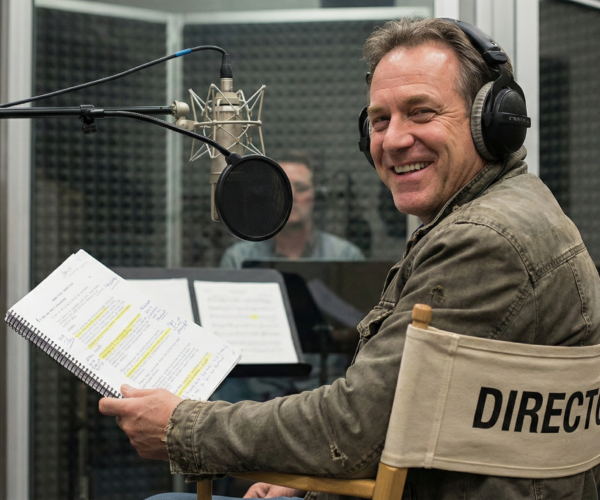
After all, you know your project best. If you’re present at the voice recording in the studio, it may happen that you discover details you want to change when the speaker actually reads. It’s difficult to predict the final product, but if you’re present at the time, you can make on-the-fly changes. If you can’t be there physically, it’s also possible digitally.
- Follow Up on Your Production Afterwards – How Did It Go?
Despite the fact that money, time, and soul are invested in projects, they are rarely followed up. How did it actually go? What could you do better? How did the voice recording sound? Taking a few steps back to celebrate success and learn from any setbacks is an effective way to improve. It sounds very clichéd, but is also a great truth. Ask customers, employees, and others who have experienced the final product for feedback. Dare to look back.
Ready to Start – Time for Voice Recording!
How does it feel? Are you in the starting blocks ready to begin, or are you alone in a wilderness of question marks? Don’t worry, we are the call that leads you home. Regardless of where you are in the process, contact us – and we’ll help you move forward. If you wish, we’ll be with you in all steps, from idea to script and execution.
On our website there is also plenty of information about how to proceed. You can also preview our talented voice actors or share them with your organization or your customers. You will surely find a suitable voice for your particular voice recording.
We’ll be in touch!