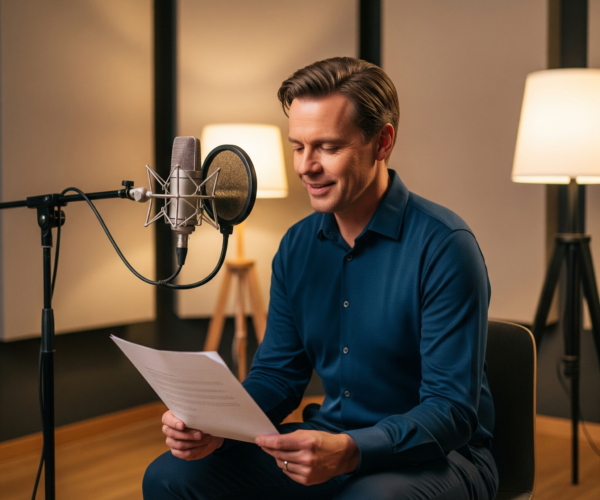
So, what does a sound engineer actually do, you may wonder? Some might argue that the sound engineer’s role is the most important of all members of the audiovisual production team. Why?
Imagine this: you have just received the final version of your latest project. You rub your hands in excitement and expect to hear something incredible when you press play. After all, with a great script and talented voice actors, what could go wrong? But instead of an immersive soundscape, you hear a distorted, echoing sound that hurts your ears. And in an instant, your project—one that was going to be so good—crashes and burns.
This example highlights the need for a skilled sound engineer to steer your project in the right direction—someone who helps you organise your project’s audio by balancing creativity with technical expertise.
But what does a sound engineer do? Let’s take a closer look at what a sound engineer is, what a sound engineer does, and the different types of techniques they use for different projects.
What is a sound engineer?
A sound engineer is a trained technician who is part of all audiovisual production. Their sound-sensitive, well-trained ears help them work on a variety of projects, from voiceovers and online/app games to product demonstrations/explainers/eLearning videos, films and radio. But they are more than just tech geeks tinkering with electronics. Some sound engineers can even design and oversee the sound at conferences, corporate or sporting events, music performances and broadcasts. But with such a varied field of work, what do these technicians do in different AV projects?
What does a sound engineer do?
Sound engineers directly influence every part of a project because they handle everything from microphones, mixing consoles and overall acoustics to editing software and plugins. Like a conductor coordinating different musicians and instruments in an orchestra, a sound engineer guides and manages the many technical aspects of a production’s audio. These trained technicians also have many audiovisual responsibilities during production.
Here is a quick breakdown of their responsibilities:
Work with the producer/director to understand the project’s vision and offer creative ideas.
Design and set up the entire recording system, including microphones, monitors and mixers.
Use a mixing console to control audio quality before and during a recording.
Carry out sound checks.
Resolve audio issues that arise during recording.
Enhance and edit audio using hardware and software tools.
Different types of sound engineers
Although sound engineers primarily work in audio environments, different projects require specific niche expertise. Here are 5 examples of niche areas for sound engineers.
1. Studio sound engineer
A studio sound engineer handles mixing and mastering, adding various effects, auto-tuning, equalisation and more in the studio. However, this type of audio modification only happens once the entire recording is complete.
2. Game audio designer
A game audio designer works with video game audio. Their design ranges from music tracks to character dialogue and sound effects such as cars, bicycles, soldiers and war sounds. They can even create new or different sounds for a specific project.
3. Recording engineer
A recording engineer handles the audio during recording sessions for voiceovers, podcasts or music videos. These experts set up recording equipment and make sure the sound is perfect!
4. Post-production engineer (Audio post technician)
A post-production engineer handles audio for TV and film productions. Although, as the name suggests, they also only get involved once production is complete.
5. Systems engineer
A systems engineer handles the music and audio for live events. They usually work as a small team of live sound and monitor engineers. As a unit, these engineers work together to ensure the audio quality is top-class for the audience, while also ensuring that the performers can hear themselves on stage.
What does a sound engineer do for voiceovers?
Professional sound engineers can significantly improve the voice recording process. While the voice actor delivers a phenomenal read for the project, the sound engineer packages it as perfectly as if it were a wedding gift. Sound engineers keep the speech natural and unprocessed, but use tools such as compressors, limiters and noise gates to edit various aspects of the audio files. For example, they may need to reduce compression or add background music. The idea is to mix and balance correctly to deliver a complete package. For instance, the music should not drown out the speech, or vice versa. So, in a way, sound engineers and voiceovers are something of a package deal.
A few final thoughts on sound engineers
Working with a sound engineer can do wonders for your audio project, whether it is a short eLearning video, a product film or an advert. They can help you understand and use advanced technology and equipment to record audio and video. Sound engineers can even create new techniques and sound effects to enhance your audio projects. As trained technicians, they help you achieve high-quality audio that is pleasant to the ear and captures the audience’s attention. And this will make them come back to see more of your work.
So now that you know your project requirements, it is time to hire a voice actor to take your audio production to new heights! Keep in mind that a voice actor’s talent and a professional sound engineer are essential ingredients for a perfect result. And Voice To Me has plenty of professional voice talents to suit all types of projects. We also, of course, offer post-production and editing by our professional sound engineers, if desired. So click here and book a voiceover today!